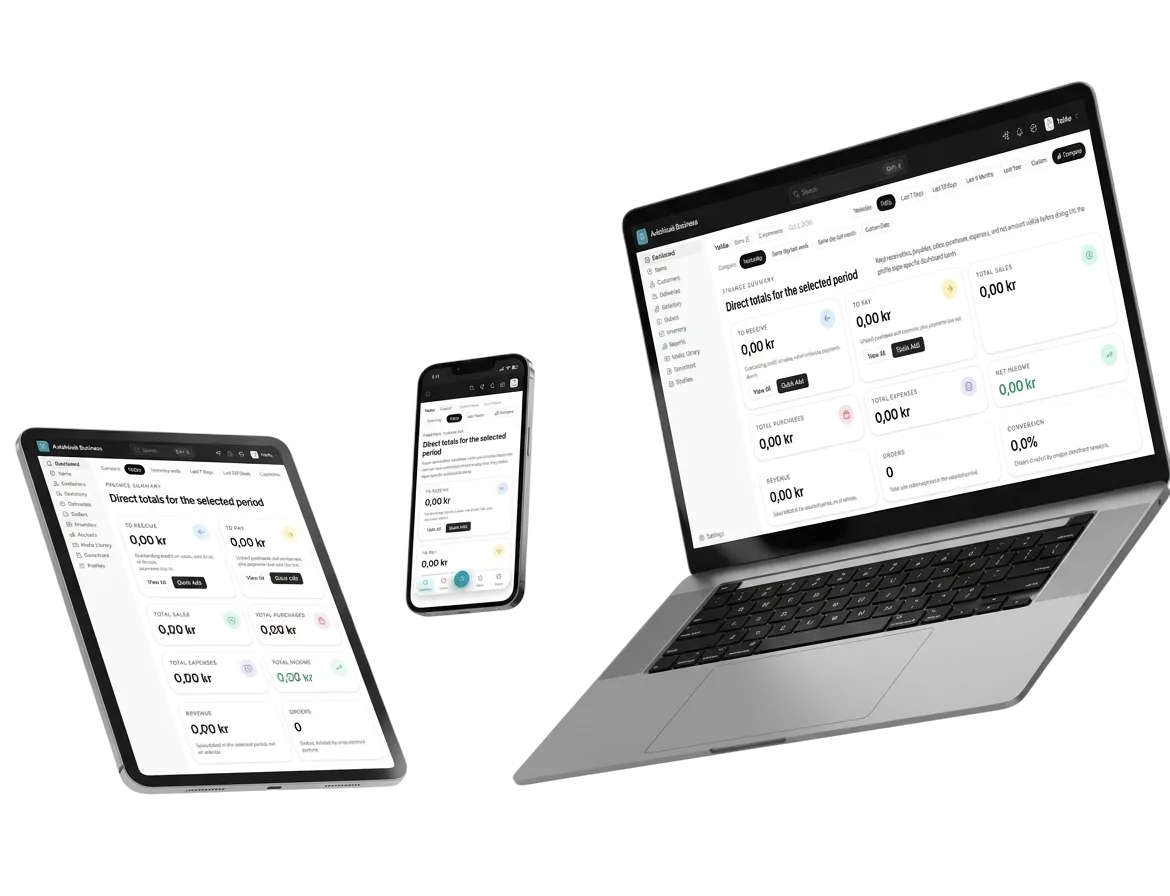
Know what you made, not just what you sold
Profit & Loss runs from Merchandise Revenue through Cost of Goods Sold and Gross Profit to Operating Expenses and Net Profit, for any date range, with what was collected and what is still to collect.
Profit & Loss · Bhadra
- Gross Profit
- Rs 281,345.35
- Net Profit
- Rs 116,415.35
In short
The Profit & Loss Report takes Merchandise Revenue, subtracts Cost of Goods Sold for Gross Profit, then Operating Expenses for Net Profit, for the date range you pick. It also shows Collected and To Collect, so a profitable month with unpaid invoices is visible as such.
The problem it solves
A busy month can still lose money. Sales totals say nothing about what the stock cost or what the rent and wages took.
How it works
4 steps, start to finish
-
1
Pick a date range
Choose from and to dates, and an account if you need one.
-
2
Read the statement
Merchandise Revenue, Shipping Collected, COGS, Gross Profit, Operating Expenses and Net Profit.
-
3
Check the margins
Margins are shown as a share of Merchandise Revenue.
-
4
Drill in
Tabs list the sales, purchases, expenses and payments behind each number.
In detail
What profit & loss does for you
-
Gross Profit
Merchandise Revenue minus Cost of Goods Sold.
-
Net Profit
Gross Profit minus Operating Expenses.
-
Collected and To Collect
Cash received against the period's sales, and credit still outstanding.
-
Shipping apart
Shipping Collected is shown on its own line, outside merchandise revenue.
-
Excel and PDF
Export the statement for your accountant.
-
Quantity sold times each item's cost price, over the same sales that count as revenue, including sales still on credit.
-
No. Profit & Loss works on merchandise revenue; taxes are not part of the statement.
-
Profit & Loss is one of the reports with a Profiles filter, so you can combine businesses when your plan includes it.
Profit & Loss · Free to start
Try profit & loss on your own business
Set up in a couple of minutes. Your catalogue, orders and books stay yours to export.
- Live in 2 minutes
- Free to start
- No credit card